


Keeping Yourself Cyber-Safe
 When we were growing up, getting ripped off was something you worried about when you left home. Today, the threat is most likely to come while we’re at home through our computers or smartphones.
Cyber-crime is skyrocketing. Here are 4 up-to-the-minute tips to keep you, your personal information, and your money safe!
-
-
-
- Check the URL of the sites you shop on. Cyber crooks have gotten very good at creating website addresses that are very close to the URLs for legitimate sites. The experts say, don’t click on links you may find in emails or pop-up ads that advertise fantastic deals. Instead, Google the business yourself and then use that link to take you to the legitimate shopping site.
- Store any sensitive financial information on an external hard drive and not directly on your computer’s hard drive. Then, remember to unplug that drive when you’re not actively using that information.
- Use two-factor authentication wherever possible. This means not just having a password but also getting a text message containing a different login code every time you log in. That way, if a thief gets your password, they still won’t get that authenticator code.
- Reboot your phone regularly. Should you inadvertently click on a link someone sent you, they may be getting access to your phone and any sensitive information it may contain. However, every time you reboot your phone, you essentially kick out anyone who may have snuck in.
-
-
The Newest Scams of 2025
 While the internet has brought us so many great things, it has also proven to be a fertile field for fraudsters. While you’re probably aware of such time-tested scams as phony virus warnings on your computer and fake IRS “warnings” on your cell phone, here are two of the newest scams and how to protect yourself from them:
Fake Celebrities: AI is certainly proving to be a mixed blessing as we are having a harder and harder time determining what’s real and what’s fake. Con artists are now using AI to create phony product endorsements from celebrities you may like or follow. In some cases, these fake audio and video messages can actually be tailored to make you think you’ve entered into an actual relationship with a celebrity (who will, at some point, hit you up to buy something).
You can protect yourself by remembering that 1.) celebrities are really too busy to be asking you personally for money or getting into a relationship with a total stranger, and 2.) you can double check anything by going online yourself and search by the celebrity’s or product’s name with the word “scam” included.
Fake Jobs: We have personal experience with this one. Crooks will assume the name of actual businesses and may even copy the name of the firm’s HR director or hiring manager and make you think they’re looking to hire you. They can even engage in phony job interviews and skill assessment tasks. Then, they will send you a “hiring bonus” check or a check to “cover equipment” they want you to purchase (this is used often with work-from-home opportunities). Then, they will claim the bonus contained an “overpayment,” and would you please send them back a portion of the check. In the case of equipment, they’ll want you to purchase it from their “preferred vendor.” In most cases, they’ll ask for you to use an electronic transfer app like Zelle because the transaction is hard to trace, and you getting a refund once you realize you’ve been scammed is impossible!
Of course, these checks will bounce, but the fraudsters are counting on you to fork over your money before you find out their check has bounced.
You can protect yourself by visiting the company’s website and seeing if the job opening is real. Or you can call them (that’s what we did) and speak to the actual hiring manager or HR director.
The High-Flying History of the Frisbee
A Baby Boomer Phenomenon
 While we were born too early for Teddy Ruxpin or video games to be toys of our youth, we were around for the start of one of the most enduring toys of all time – the ever-popular Frisbee.
Legend has it that the Frisbee actually dates back to the late 19th century when students at Yale and other New England universities began playing catch with the used pie plates made by the nearby Frisbie Baking Company of Bridgeport, Connecticut. They yelled “Frisbie!” to warn passersby away from the spinning discs.
This practice continued right up through the Second World War, and in 1948, Walter Morrison and his partner Warren Franscioni, took their inspiration from this activity and created a plastic version of the pie plates to sell at county fairs. The airfoil at the outer edge, called the Morrison slope, gave the toy its lift in flight.
 Hoping to cash in on the then-current fascination with UFOs after the 1947 sightings in Roswell, Morrison called his creation the “Flying Saucer,” then the “Pluto Platter.” But the toy never really caught nationally until Wham-O founders, Arthur “Spud” Melin and Richard Knerr (creators of the Hula Hoop), bought rights to the toy in 1955. Learning of the origin of the flying disc, they renamed it “Frisbee” in 1958, and that’s when sales finally soared… like a Frisbee!

Early in the 1960s, Baby Boomers embraced the Frisbee as their own. Wham-O’s first “professional” Frisbee followed in 1964. Just three years later (1967), the International Frisbee Association was founded. One year later, the first Frisbee Golf Tournament was held in California. Also in 1968, teenagers at Columbia High School in New Jersey invented Ultimate Frisbee, a game played by over 5 million Americans today.
 While Wham-O could trademark the name Frisbee, they couldn’t get a patent on its design. So, countless other manufacturers have created their own “flying discs,” while the name Frisbee has become almost a generic term for the toy in the same way that Kleenex is used to refer to any “facial tissue" (but is still a trademarked name belonging to the Kimberly-Clark Corporation).
 Frisbees now come in all kinds of sizes and colors but will always be one of the great contributions the Baby Boomers made to worldwide popular culture!
Try This Memory-Boosting Trick
 It’s nothing to be ashamed of. As we age, our memories get less reliable, especially our short-term memories. (We prefer to think that our brains have become very full of useful information we’ve been gathering for over 60 years and have limited room for new information.) But the experts say there are a few simple tricks we can do to help us remember the small day-to-day stuff, like where you left your wallet.
One of the reasons we sometimes lose track of our most often-used items is that we’ve put them down thousands of times over the course of our lives. Our brains tend to remember the unusual, the novel, not the mundane, routine stuff we do every day. So, we don’t pay as much attention as we should when we lay down our eyeglasses, car keys, etc. This won’t cause a problem if we leave them in the spot where we normally park them, but it causes all kinds of problems when we place them somewhere else.
The experts suggest that whenever we lay down an item like our wallet or car keys, we take just one moment to notice something else about where we are – the smell of flowers in a nearby vase, the crumbs on the table. These small, seemingly unimportant details can help you recall where you left your stuff!
Nuts to You!
 Good news! There are some healthy foods that actually taste good and you’ll want to eat. It’s nuts!
No, not a crazy kind of idea, but the actual food category of nuts. They’re loaded with nutrients and, as more and more research is showing, many kinds of nuts also have additional benefits to our mental as well as physical well-being.
Here’s just a small sample:
Almonds – Almonds are an incredible source of vitamin E, which has been shown to reduce the risk of dementia.
Pistachios – Pistachios help the brain generate what’s known as gamma waves, which boost cognition and memory.
Walnuts – In addition to being rich in fiber and protein, walnuts are also believed to help improve mood.
Roasted or Raw?
That’s up to your personal taste. Research indicates that there's no difference in the health value between roasted and raw, provided the nuts are roasted without oil.
What if You’re Allergic to Nuts?
If you are one of the unfortunates who are allergic to tree nuts, some of the same benefits can be yours by upping your consumption of seeds such as pumpkin seeds and hemp seeds.
Say "Hi!" to Some Old Friends
Growing up as Baby Boomers, we spent time with a lot of kids our own age when perched in front of the TV. Here’s how a few of them are doing today.

Top Row L to R: Barry Livingston (My Three Sons), Billy Grey (Father Knows Best), Jon Provost (Lassie), Stanely Livingston (My Three Sons). Bottom Row L to R: Paul Peterson (The Donna Reed Show), Billy Mumy (Lost in Space).
Marianne Faithfull (1946-2025)
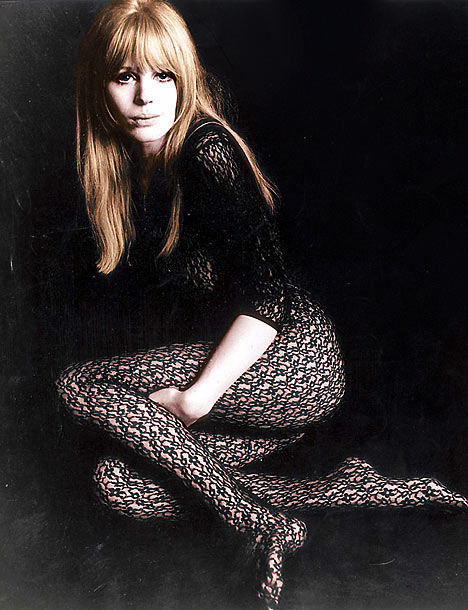 It is with sadness that we note the passing of singer-songwriter-actress, Marianne Faithfull. She was 78 years old.
Faithfull first gained fame when she was discovered by the Rolling Stones’ manager, Andrew Loog Oldham, while attending a party for the band. Her first record, "As Tears Go By," was penned by the Stones’ Jagger & Richards. It cracked the American Top 40 and the Top 10 in the UK. Of course, her stunning good looks didn’t hinder her career. She followed that up with three more singles that charted on both sides of the Atlantic, but she was becoming more famous for being Mick Jagger’s girlfriend.
Sadly, she also became known for her chronic drug use. A failed suicide attempt inspired Jagger to write “Wild Horses,” reportedly based on her comment to Jagger in the hospital that those animals couldn't drag her away from him. After their split, her addiction to heroin grew worse. For a time in the 70s, she was actually living on the streets as a homeless person.
Faithfull eventually achieved sobriety and was able to launch a successful comeback. Years of chromic laryngitis and drug use had altered her voice, making it raspy and lower pitched. Critics and fans agreed that it added a depth and additional emotional layer to her singing. She achieved success with her first LP for Island Records, Broken English, in 1979. She continued to release new music through 2016 and toured often.
Faithfull also had an extensive acting career appearing on stage, screen, and television in productions ranging from Shakespeare’s Hamlet to appearances on the British sitcom Absolutely Fabulous.
Plagued by health problems, starting with childhood tuberculosis and continuing throughout her life, her later tours were frequently curtailed. She is survived by a son.
The Story Behind the Song: "Lookin’ Out My Back Door"
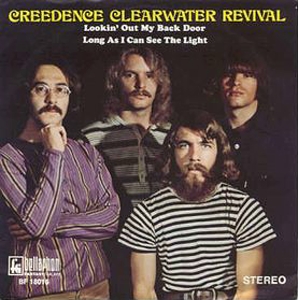 As the hippy-trippy 60s were moving into the wide-open 70s, any song lyrics with an ounce of imagination were rumored to be about or influenced by drugs. That was true of this catchy little tune from Creedence Clearwater Revival.
Since they burst on the national scene with their cover of “Susie Q” in 1968, the band dominated the top 40, scoring 6 consecutive Top 10 smashes. “Lookin’ Out My Back Door” made it 7 (and more would follow before the streak (and the band) came to an abrupt end in 1972). The tune came at the peak of the band’s popularity, off their Cosmo’s Factory, an LP that yielded no less than 6 singles. “Lookin’ Out My Back Door” made it all the way to #2 on Billboard’s Hot 100 in 1970.
It’s wild and wacky lyrics about a lawn filled with giants doing cartwheels, a statue wearing high heels, elephants, a flying spoon, and more convinced many that Creedence songwriter & lead vocalist, John Fogerty, must be high on something.
Actually, there’s more Dr. Suess than LSD inspiring the tune’s whimsical backyard parade. Fogerty wrote the song for his 3-year-old son, Josh. Seems Josh had really taken to Dr. Seuss’ book about an equally silly parade, To Think That I Saw It on Mulberry Street. Fogerty had read it to his son so many times, that he finally decided to see if he could get that same spirit into one of his tunes.
So, that’s the real story. Just don’t ask us about Donovan’s “Mellow Yellow,” okay?
Memory Boosters # 1
 As we grow older, all of us experience some problems with memory. Don’t panic. It’s perfectly normal. We prefer to think that the data center we call our brains simply has so much more data to store than it did when we were in our twenties or thirties, that naturally, it takes a bit more time and effort to sort through all that stuff to find what we need.
One of the most common ways this manifests itself is when you get up to fetch some object or perform some task, arrive at what you know was your destination, but forget why you went there. Again, don’t panic. This happens to all of us. The cause is what memory experts call “the doorway effect.” In simple terms, when we walk into a new environment, our brains do something like a reboot, taking in all the new sights and sounds around us. That can cause us to temporarily forget what purpose we had in mind when we started out.
There are a couple of solutions to this problem, experts say. One is to keep repeating the task as you get up and move into a new room or location. The second is to return to the room or location you were in when you decided you needed to go someplace else. When you get there try to retrace as many of the thoughts and actions you had before you went on the move.
Most of all, try to relax. Stressing will only make it harder to remember.
Where the Trouble Started...
It's was 1953 when Swanson Foods discovered they had 260 tons of turkey meet left after the Thanksgiving holiday. That year, one of their salespeople, Gerry Thomas, had been served the actual first frozen dinner aboard a flight on Pan Am Airlines. That dinner was the invention of William Maxsom, a farmer who had discovered how long foods could be kept frozen when he began freezing crops he overproduced in the 1940s. Maxson discovered they retained most of their flavor when unthawed - even a full year later. Maxsom called his first efforts "Strato-Meals" and sold Pan Am on the process.
When Gerry sampled one of the Straoto-Meals on that flight, he went back to the Swanson brothers with a solution for all that frozen turkey. While Thomas onbviously didn't invent the concept, he did propose one key element which quickly catapaulted Swanson into the forefront of the frozen food frontier. He proposed naming the meals "TV Dinners."
It was marketing genius! Television was rapidly taking over in homes across the American 1950s. The idea of a quick, easy-to-fix dinner that families could eat while remaining glued to the tube was an instant hit. The fact that most of these meals were about as tasty as chewing cardboard didn't matter. A major shift in American cuisine had taken place, just as significant as the McDonald brothers hamburger stand would be a few years later.
And if you are a Baby Boomer, you were there when it happened!

Pop Up Player

Latest Posts–Fads & Fashion
-
Happy Easter From Boomtown America!
Mary, Mr. Grant wants to see you in his office to discuss appropriate work attire!
-
Paging Dr. Freud
Besides the obvious sexism, implying single women were somehow going ketchup-less...do you find anything, oh, somewhat suggestive about the woman's pose and what she's running her finger over?
-
Back When Everything Really Was Archie
The True and (Mostly) Untold Story of America’s #1 Teenager In the days before cable TV, DVDs, and video games, no summer vacation was complete without at least one afternoon (and probably many more) spent…
-
Those Crazy Teenagers - 21st Century Style
Now that we're in the 21st Century, I'm sure we all recognize how true the view from 1952 was!
-
Juke Box Heroes
Watch out Marvel Cinematic Universe. There are some new heroes in town!
-
That’s the Way the SuperBall Bounces!
Wham-O was the unquestioned king of kid fads during the 1960s. They started hot with the Hula Hoop and finished even hotter with the Frisbee (a fad that never, ever went away). In between, they…