


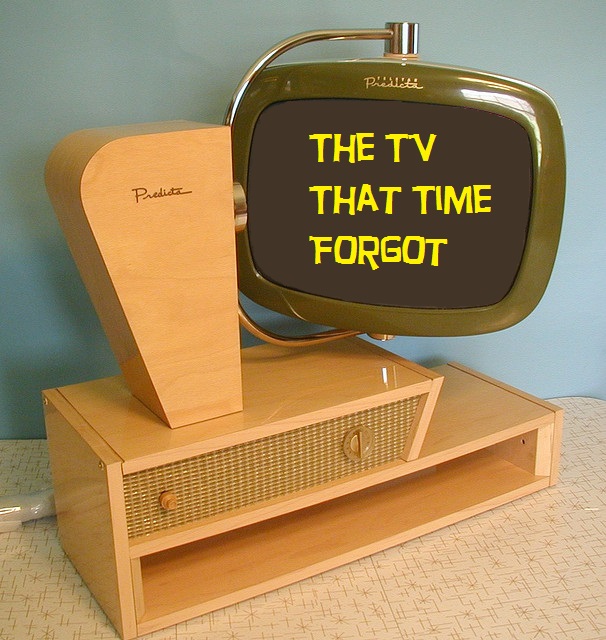
The TV That Time Forgot: Hawaiian Eye
 In show biz, imitation may not be the sincerest form of flattery, but it is the most predictable.
When 77 Sunset Strip was a rating success in the 1958 -59 TV season, Warner Brothers immediately began working up other series with the same basic components.
First, you need an exotic, but American locale. Hawaii was perfect. Not only was it tropical, but it was very topical as well. During 1959 and 1960, Hawaii was on its way to becoming our 50th state.
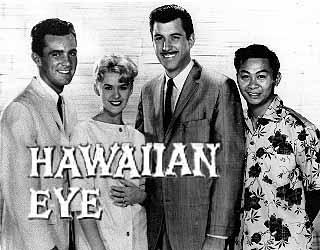 The Hawaiian Eye Detective Agency was headquartered in Honolulu’s upscale Hawaiian Village Hotel. The detectives performed security duties for the hotel in exchange for rent. The offices were quite elaborate with a tiki statue by the front door (often kissed for good luck) and a full sized private swimming pool! (Just what every private eye needs.)
Next, you add a handsome but mature leading man (the Efrem Zimbalist of the show). For Hawaiian Eye, that would be Anthony Eisley as Tracy Steele.
Add to that the younger private eye (the Roger Smith of the show). That was a young Robert Conrad, making his debut as TV series regular as Tom Lopaka, allegedly half-Hawaiian, although Conrad certainly didn’t look or sound even partially Polynesian, but he did emerge from the swimming pool with his shirt off quite often.
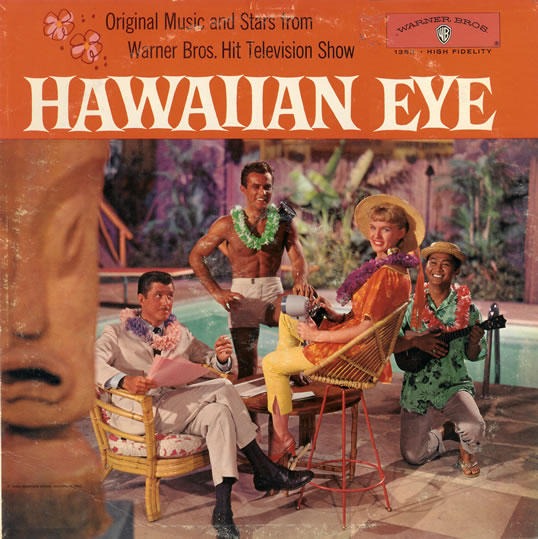 For teen appeal (the Ed “Kookie” Brynes of the show), Warners cast a young actress they also hoped might have a singing career, Connie Stevens as Cricket Blake. Cricket was certainly kept busy. When not sleuthing with the boys, she ran the hotel’s gift shop, took photos of the guests and sang in the hotel’s cocktail lounge. She also found time to flirt shamelessly with both Eisley and Conrad.
Hawaiian Eye’s comic relief character (the Roscoe of the show) was local cab driver Kim Quisado, played by Poncie Ponce. One of the running bits on the show involved Kim having relatives all over the island who would occasionally lend a hand in the caper of the week.
Finally, the show also featured a snappy, uptempo title tune crooned by vocal quartet.
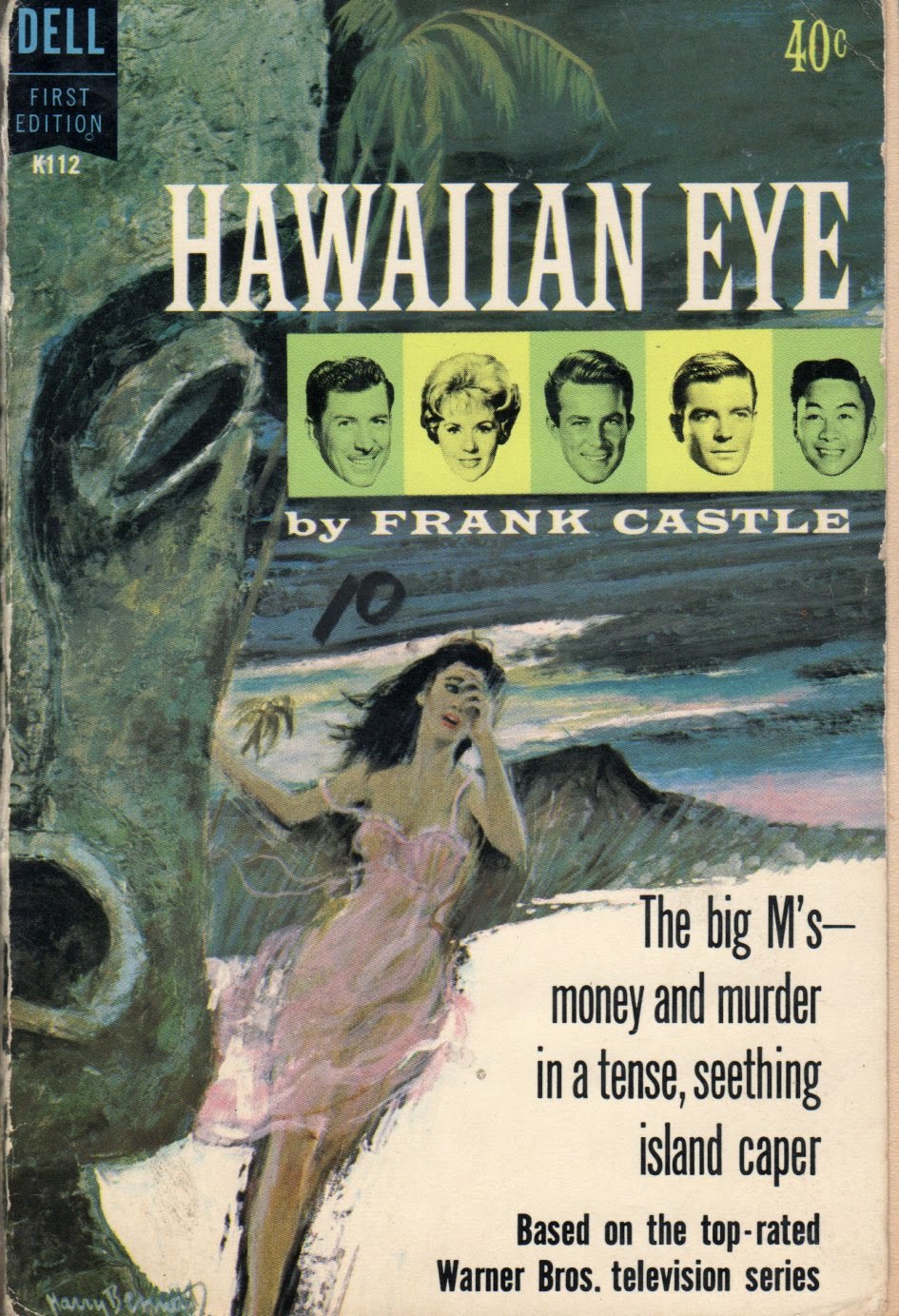 Warners Brothers would go on to try the formula two more times (with Surfside 6 and Bourbon Street Beat, set in Miami and New Orleans respectively), but Hawaiian Eye was far and away the most successful of the Sunset Strip clones.
Like their other detective shows, the episodes were really filmed in and around L.A. with location footage edited in. This made it easy for characters from other Warner Brothers series to crossover. In fact, the Hawaiian Eye detectives showed up on 77 Sunset Strip on one occasion with the Sunset Strip team returning the favor.
The show ran for 4 seasons on ABC from 1959 to 1963. Eisley left the show after the 3rd season and was replaced by Troy Donahue (who came over from the just-cancelled Surfside 6). In those days, TV seasons could stretch well beyond 30 episodes per. In all, Hawaiian Eye filmed 134 episodes and did quite well in syndication until black and white series lost their appeal.
Afterwards, it faded into memory. To date, there has been no home video release although reruns have occasionally shown up on those nostalgia cable channels.
This Day in Rock History - July 2nd
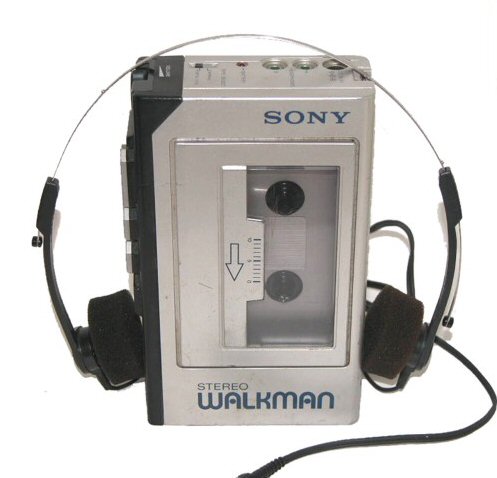
1979: It was on this day that Sony introduced the world’s first portable cassette player, the Walkman.
This Day in Rock History - July 1st
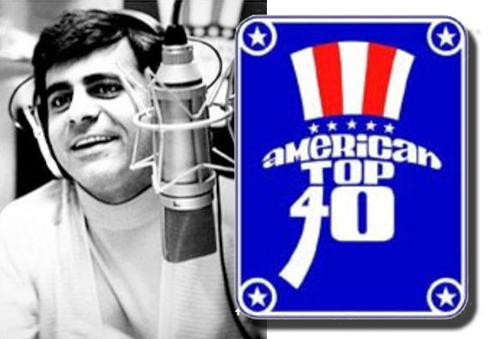
1970: Casey Kasem begins a weekly syndicated radio show called “American Top 40.” And now, back to the countdown…
Reducing Gum Disease, By Gum
 We pretty sure you’ve probably never heard of “oil pulling.”
It’s a practice that comes from ancient India that involves swirling coconut or sesame oil in your mouth for 20 minutes a day. Studies show that the oil “pulls” bacteria from the mouth.
There are those who also claim it whitens teeth, but there is no current research to back up that claim.
This Day in Rock History - June 30th
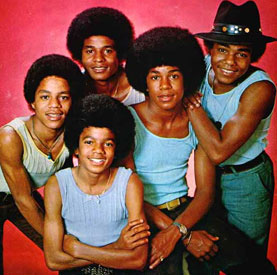

1975: The Jackson 5 announce they are leaving Motown Records to sign with the Epic label. It turns out, Motown owned the name “The Jackson 5,” so the lads promptly rename themselves just “The Jacksons.”
This Day in Rock History - June 29th
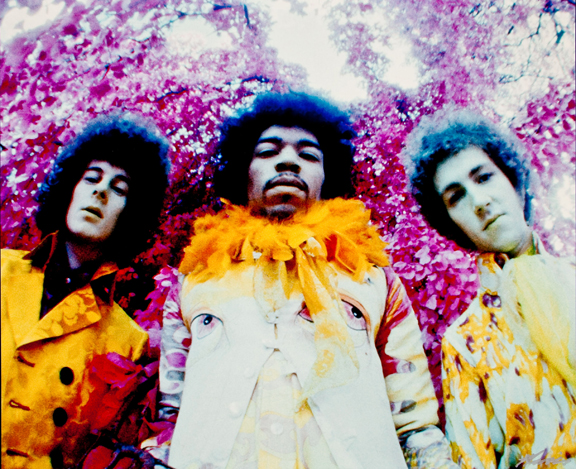
1969: The Jimi Hendrix Experience plays their last gig, appearing for the final time at the Denver Pop Festival.
This Day in Rock History - June 28th

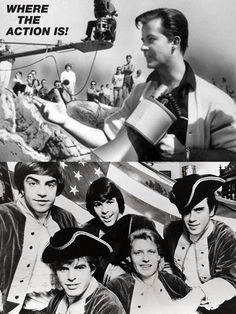 1965: ABC-TV debuts the newest pop music show from producer Dick Clark. Where the Action Is features a theme song by Freddy Cannon, appearances by Jan & Dean, Linda Scott and Dee Dee Sharp as well as introducing America to the show’s “house band,” a little combo from Portland by the name of Paul Revere and the Raiders.
Slow Dancer (1974)
A Hidden Treasure From Rock & Soul’s Golden Era
A series of posts about albums you may have missed back in the day when so much good music was coming out on nearly a daily basis. But now that the real “good stuff” is few and far between, you might want to backtrack and add these gems to your music collection.
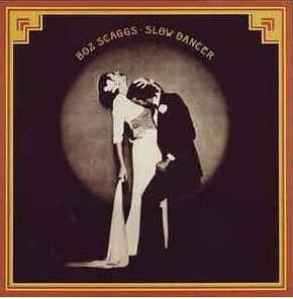 It happens so often in rock music. Artists struggle for years with albums the critics love but record buyers ignore. Then they finally break through to a wider audience and go on to long, successful careers. Yet, those earlier albums remain, for the most part, ignored.
Such is the case with Boz Scagg’s “Slow Dancer” in 1974. It was his 6th album and his 6th commercial failure. Yet, many die hard Boz fans will tell you “Slow Dancer” is his best album. We don’t think they’re wrong.
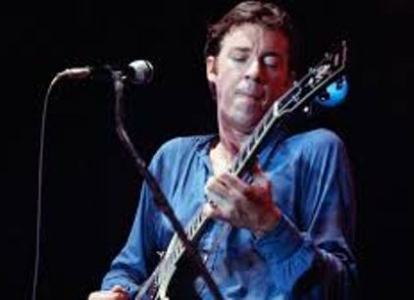
William Royce Scaggs was given the nickname “Bosley” while still in grade school. It was quickly shortened to “Boz” and obviously stuck. Boz was an original member of the Steve Miller Band (having been friends with Miller since the age of 12).
Whether you call it “white” or “blue-eyed” soul, Boz as a solo artist has always been one of the best of the white boys to sing rhythm and blues.
For “Slow Dancer,” Scaggs teamed with veteran Motown songwriter and producer Johnny Bristol. Bristol had produced “Ain’t No Mountain High Enough” for Marvin Gaye & Tammi Terrell, “Twenty Five Miles” for Edwin Starr, “What Does It Take (To Win Your Love)” for Junior Walker and “Someday Will Be Together” for Diana Ross and the Supremes (that’s Bristol himself singing the male vocal to Ross’ lead).
(In fact, 1974 was a very good year for Bristol. He also scored his one and only hit as a singer with “Hang on in There Baby,” which hit the Top 10 in both the US and the UK.)
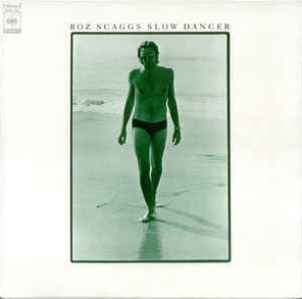 Together or separately, Bristol and Scaggs composed 9 of “Slow Dancer’s” 10 tracks. They include:
“You Make It So Hard (To Say No)”
“Slow Dancer”
“Angel Lady (Came Just in Time)”
“There Is Someone Else”
“Pain of Love”
“Sail on White Moon”
“Let It Happen”
“I Got Your Number”
“Take It for Granted”
The one song on the LP that neither man had a hand in writing was “Hercules” (no relation to the Elton John tune) penned by veteran songsmith Allen Toussaint.
The entire album features lush orchestrations with full string and horn sections. At some points, it almost sounds Boz is making his bid to become our generation’s Sinatra. Regardless, there is not one wasted track on the entire album. Each one is a polished gem of soul and sensuous sophistication.
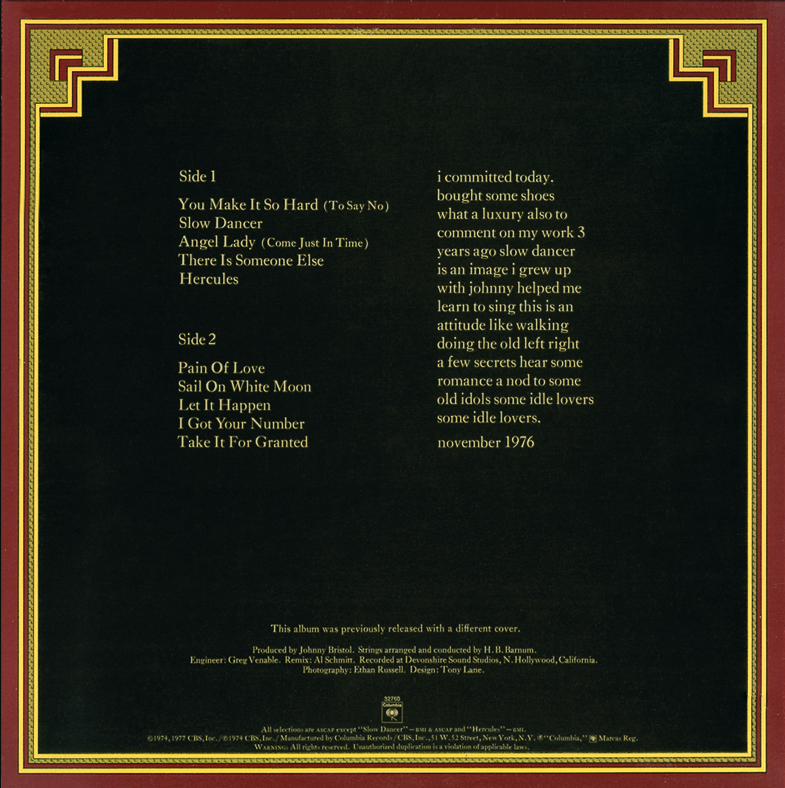 “Slow Dancer” was Boz Scaggs’ best-selling album to that point, but that’s not saying much. It peaked at #81 on Billboard’s Hot 100 Albums and then sank like a stone.
That Boz was slightly ahead of his time should be obvious. His next album, released 1976, was “Silk Degrees.” That record hit the top of the charts worldwide, spun off multiple hit singles and went 5X Platinum.
Over time, many have finally discovered to sonic smoothness of “Slow Dancer.” The album has been certified Gold. But still, too few people really know this rare pop gem.
Do yourself a favor. Track down a copy. Then settle back in your favorite easy chair with your favorite adult beverage close at hand, close your eyes and let Boz show you just how good a white boy can sing those rhythm and blues.
The Movie That Changed Everything: "A Hard Day's Night"
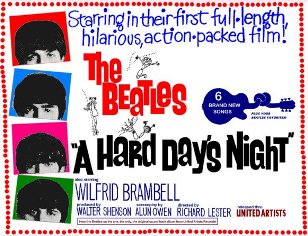
 Now, more than half a century later, there has never been a rock & roll film that has surpassed “A Hard Day’s Night.” Not only is it a great rock movie and a superb time capsule showing how insane Beatlemania was at its height, but it is simply a great movie (having made many “100 Greatest Films” lists) that influenced many subsequent filmmakers and is credited with single-handedly inventing the music video.
The next time you watch this classic, here are some things you can watch for that you might have missed before.
- The film’s shooting title was “Beatlemania.” Who made the actual decision to change it to “A Hard Day’s Night” is in dispute, but all agree the phrase was originally created by Ringo after a grueling work session.
- United Artists was sure that Beatlemania was just a passing fad. They authorized a very small budget ($500,000), and memos at the time show that the studio thought the film would lose money. They were really only interested in the soundtrack album (where they believed they would make up the money they lost on the film). That’s the main reason the film was shot in black and white.
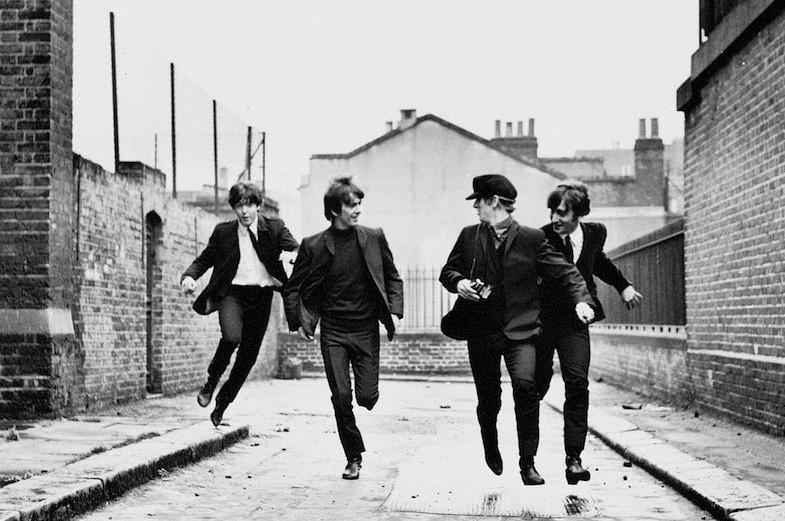
- Those opening scenes, where the boys are being chased by rabid fans to and through Marylebone Rail Station in London? The boys really are running for their lives. The film company used genuine Beatles fans who actually were trying to get their hands on the Fab Four.
- Look closely and you’ll see that George falls during that chase and Ringo goes tumbling after him. There was no way to cut due to those screaming fans. So the lads have to pick themselves up and continue their mad dash.
- While the script seems at times to be ad-libbed, it was all scripted. Screenwriter Allun Owen spent several weeks with the Beatles, and all concerned say he came away with an incredible knack for being able to mimic their cheeky style.
- One of the young schoolgirls on the train was Patti Boyd, who went on to become George Harrison’s first wife and later, Eric Clapton’s wife. She was also to inspire the songs “Something (In the Way She Moves)” and “Layla.”
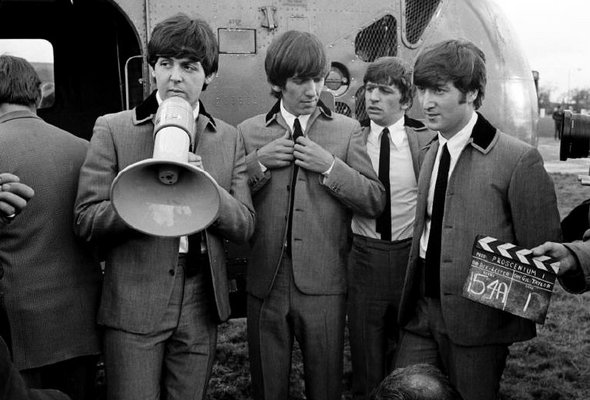 In the famous “Can’t Buy Me Love” scene (credited with being the very first rock video), John was not available for the filming, and so a double was used for the aerial shots.
- There is an “in” joke in the constant references to Paul’s grandfather as a “clean old man.” At that time, the actor playing John McCartney (Wilfred Bramell) played a junk man on British TV’s Steptoe and Son (the later American version was named Sanford and Son). As Steptoe, Bramell was constantly called a “dirty old man.” So the “clean old man” gags were funny to British audiences, but went right over the heads of American audiences.
- During the rapid-fire press conference/cocktail party, asked what he calls his hairstyle, George replies, “Arthur.” That name was picked up and used as the name of an early, trendy New York discotheque (pre-Studio 54).
- Don’t know if you’ll recognize him, but a very young Phil Collins is in the audience of kids at the televised concert that comes near the end of the film.
- Studio execs at United Artists in the States thought the Beatles’ accents would be incomprehensible to American audiences and asked that their real voices be replaced by voice actors with more “proper” British accents. Director Richard Lester declined their request.
- Where’s Paul’s solo scene? The other three Beatles all get short solo scenes: George with a TV producer, John with a dancer, and, of course, Ringo going “adventuring.” But why no solo scene for Paul?
- Actually, there was. It was an encounter between Paul and an actress that happens while Paul is out looking for Ringo. The scene was shot but cut from the film because director Richard Lester felt it simply didn’t work. It came off as too stagey. Alas, the footage for this unused scene was destroyed by the studio in the days long before home video and bonus features were ever dreamed of. However, the scene did make it into the paperback novelization of the film, and the actual script for it can be found here.
- The group’s name, “the Beatles,” is never said, even once, during the film. (It does appear on Ringo’s drum kit, the stage lighting during the concert, and a helicopter at the end, but no one ever mentions their name out loud.)
Do yourself a favor and rent, buy, or stream a copy of this classic soon.
This Day in Rock History - June 27th
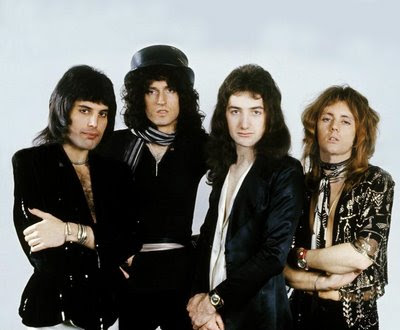
1970: The British band, Smile, performs at Truro City Hall in Cornwall, England, for the first time under their new name – Queen.
Pop Up Player

Latest Posts–Fads & Fashion
-
Anyone Remember I.D. Bracelets?
During the early part of the 1960s, the absolute, “must-have” piece of jewelry for young men was the I.D. bracelet, most famously made by Speidel. They were relatively inexpensive as jewelry goes and came in…
-
Join the IN Crowd!
A rare meeting of the Rolling Stones and that other "fab" group, the Rotting Stumps!
-
Happy Easter From Boomtown America!
Mary, Mr. Grant wants to see you in his office to discuss appropriate work attire!
-
Paging Dr. Freud
Besides the obvious sexism, implying single women were somehow going ketchup-less...do you find anything, oh, somewhat suggestive about the woman's pose and what she's running her finger over?
-
Back When Everything Really Was Archie
The True and (Mostly) Untold Story of America’s #1 Teenager In the days before cable TV, DVDs, and video games, no summer vacation was complete without at least one afternoon (and probably many more) spent…
-
Those Crazy Teenagers - 21st Century Style
Now that we're in the 21st Century, I'm sure we all recognize how true the view from 1952 was!