

 The huge wave of cash that American International Pictures was surfing with their Beach Party pictures (see what we did there?) did not go unnoticed in Hollywood, where imitation is the sincerest way they do business.
Columbia Pictures decided to see if they could catch the same wave with 1964’s Ride the Wild Surf. As AIP cast an East Coast Italian singer as their lead (Frankie Avalon), Columbia signed the guy widely thought to be a less than successful attempt to clone Avalon, Fabian.
 Yet Columbia did not produce an even cheaper knockoff of a cheap drive-in flick. Strangely, Columbia actually released what many critics consider the best of all the surf, sand, and sex films that followed in the wake of the original Gidget.
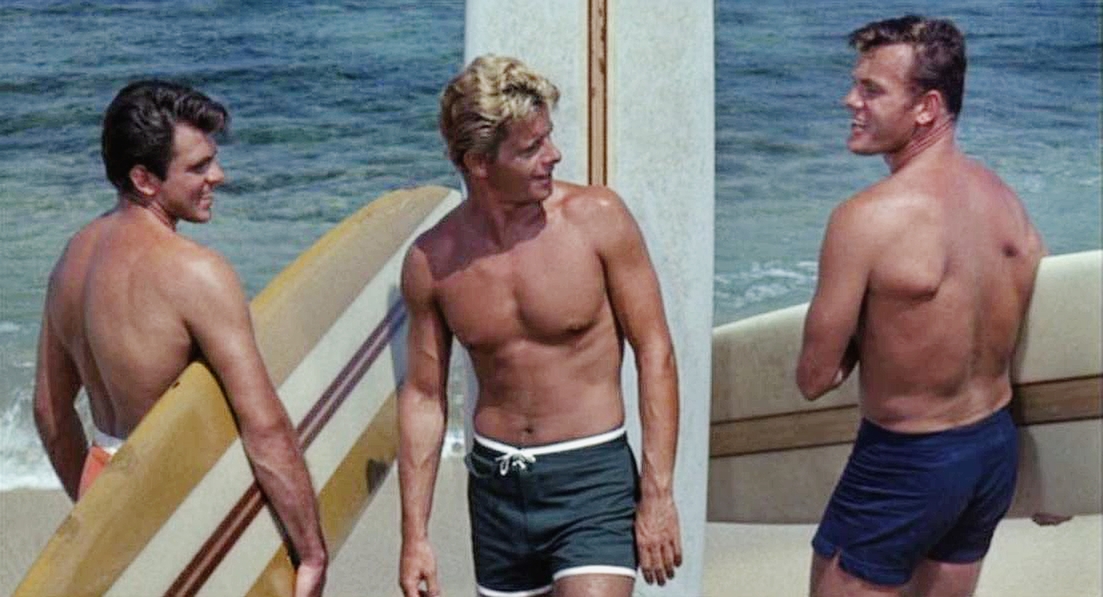
First off, the film focuses on surfing in a way that no other beach picture ever did. The film, including the surfing footage, was shot on location in Hawaii instead of purchasing already-made surfing footage and shooting in California. In addition, Ride the Wild Surf used professional surfers dressed in suits that matched the movie’s male stars. Tab Hunter and Peter Brown also dyed their hair so it better matched the surfers doubling for them.
It’s important because the main plot of the film centers on a surfing competition that pits most of the males in the cast in an endurance contest to see who can last longest in Hawaii’s savage surf. The result is some spectacular surfing footage that the sport’s aficionados say is the best ever used in a mainstream Hollywood film.

The film is also not a comedy. There are no silly subplots with the possible exception of the thankless role given to Barbara Eden. She plays the film’s only “kooky” character. We know she’s kooky because she’s named Augustina or Augie for short. Because, sure, you totally buy a 20-something girl would be named Augie. She’s also an expert in martial arts because why not? She’s kooky, right? And she wants to build her own fireworks. Did we mention she’s kooky?
The rest of the cast gets involved in some seriously complicated love affairs. Tab Hunter is wooing island girl Susan Hart against her mother’s wishes. Fabian is trying to sweep Shelly Fabares off her feet, but Shelly is resisting because Fabian has no ambition in life beyond winning the film’s surfing competition. Peter Brown, the third of the male leads, is trying to convince Barbara Eden that he can be kooky too.
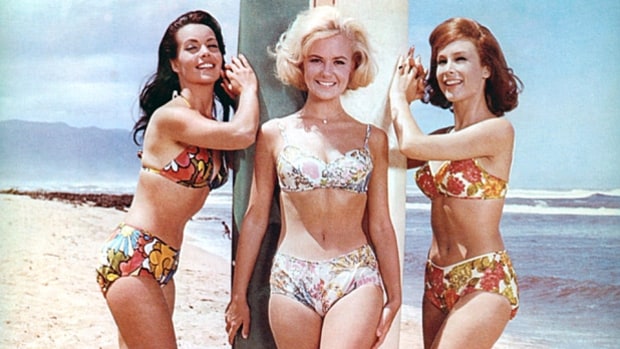 There seems to be some strange hair coloring going on in the film. After giving Peter Brown blonder hair to match his surfing double, producers asked Barbara Eden to dye her blond hair red so she would contrast with her love interest. They asked Shelly Fabares to go blond to contrast with Fabian’s dark hair. Susan Hart’s hair had to go jet black so she’d be believable as an island native.
The cast, which also includes Robert Mitchum’s son, James Mitchum, turn in performances that are better than you might suspect and the film treats the sport of competitive surfing seriously. The only musical number within the film is a Hawaiian hula performed very seductively by Ms. Hart. The title song, co-written by Brian Wilson (who also provided the title music for the first Beach Party movie) and sung by Jan & Dean makes its only appearance over the movie’s closing credits.
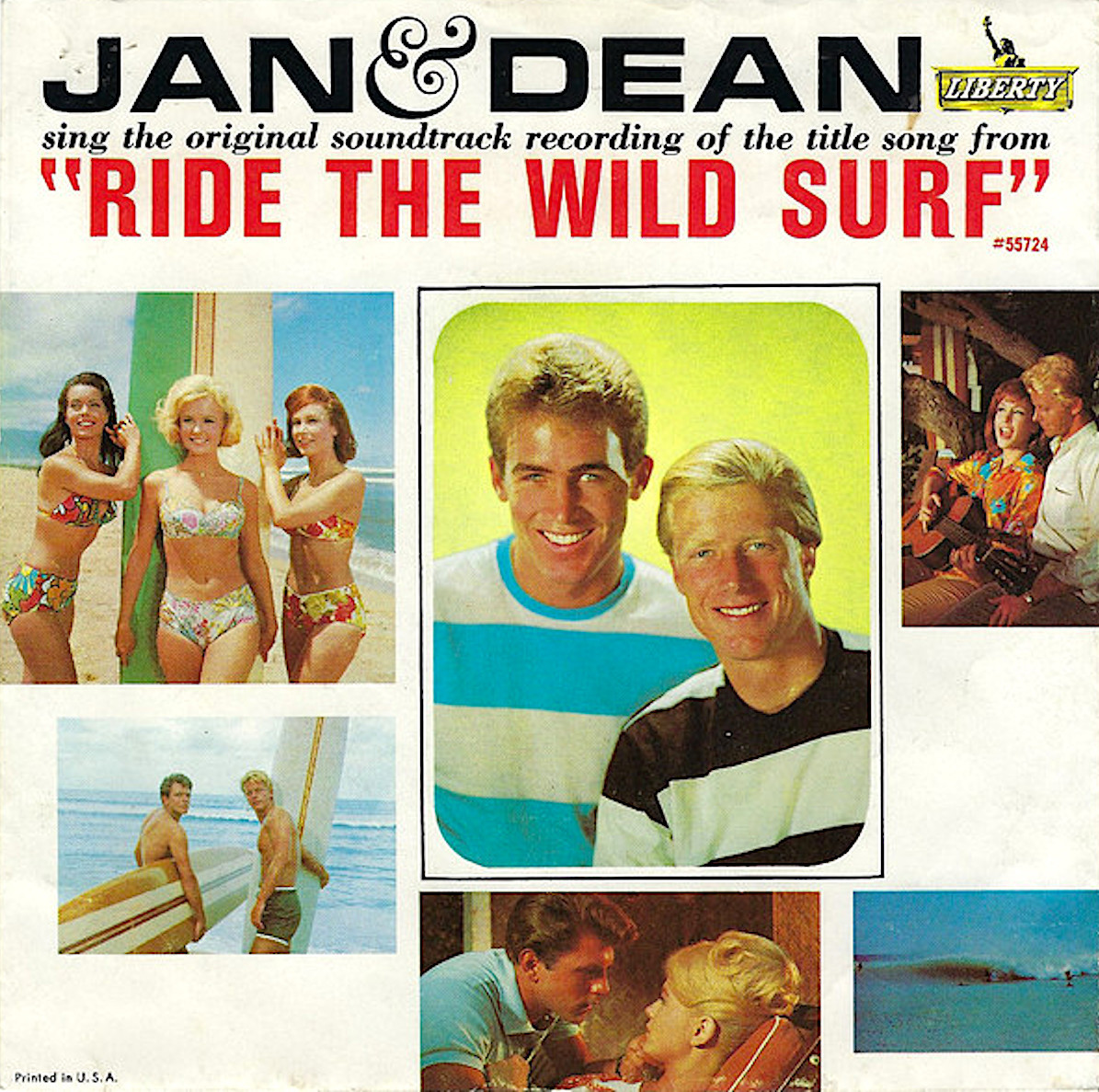 (BTW – Jan & Dean were originally supposed to appear in the movie as Fabian’s surfing buddies. Before shooting started, one of Dean’s friends was involved in a high-profile kidnapping case. His association with the singer received a lot of publicity and the studio moved to replace them with Hunter and Brown. They were still retained to sing the title track.)
Seriously, if you’re in the mood to see a serious beach picture or want a feel for what the surfing craze of the sixties was really like, track down a copy of Ride the Wild Surf and take that last ride!