


Displaying items by tag: OneHit wonders
The Story Behind the Song: Sally Go Round the Roses
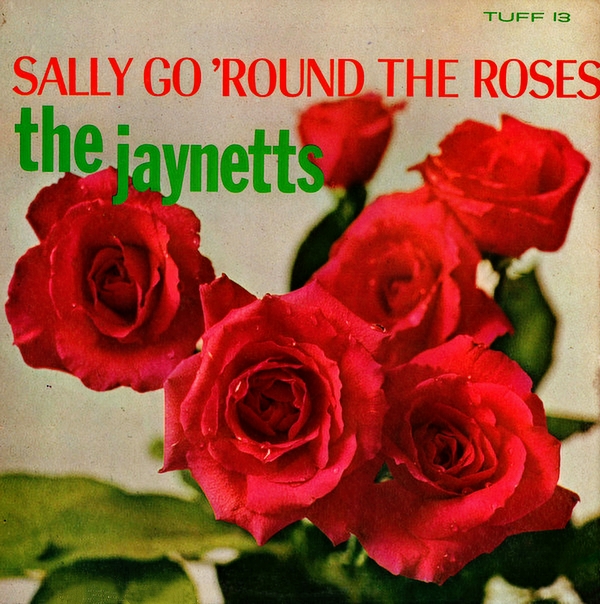 One of the simplest, yet most haunting songs of the 1960s, “Sally Go Round the Roses” hit right before the start of Beatlemania in August of 1963. The record is credited to a one-hit wonder, the Jaynetts, but the story behind the song reveals a history that’s a bit more complicated.
Abner Spector (no relation to Phil) was an A & R man for Chess Records who occasionally produced R&B sides for a small independent label known as Tuff Records. In the spring of 1963, Spector decided that he wanted to record a song with the girl group sound that was then a very popular genre (thanks to the Shirelles, the Chiffons, the Dixie Cups, etc.). So, he talked to the head of Tuff Records, Zelma "Zell" Sanders, and asked her to come up with an appropriate song and begin assembling some singers. Zell wrote the song in collaboration with Spector’s wife, Lona Stevens. The duo decided to draw their inspiration from the nursery rhyme “Ring Around the Rosie” (itself kind of creepy – as its seemingly innocent lyrics are really about the symptoms of the Bubonic Plague).
Once the song was written, Spector played the tune for arranger Artie Butler. Artie didn’t think it sounded like a hit, but agreed to do what he could with the song. To save money, Bell worked out of a small demo studio in Manhattan, hiring only 2 musicians to assist him – guitarists Al Gorgoni and Carl Lynch. Butler himself played all the other instruments. The tracks were laid down on an old Ampex machine, recording at 71/2 ips. Butler slowly built up the tracks applying a different style and amount of reverb to every new instrument he added.
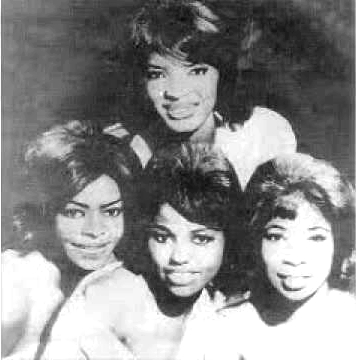 When he had the backing tracks completed, he went in the studio with a group of 5 female singers Sanders had assembled (Yvonne Bushnell, Ethel Davis, Ada Ray Kelly, Johnnie Louise Richardson and Mary Sue Wells). Butler didn’t think they were enough and began adding other voices to the recording. In the end at least 10 different women contributed vocals to the song (also including Selena Healey, Marie Hood, Marlene Jenkins, Louise Harris Murray, Lezli Valentine and Iggy Williams), with some people who attended the sessions claiming as many as 20 different singers were ultimately used.
When the record was finished, Butler played it for Spector. And Spector hated it.
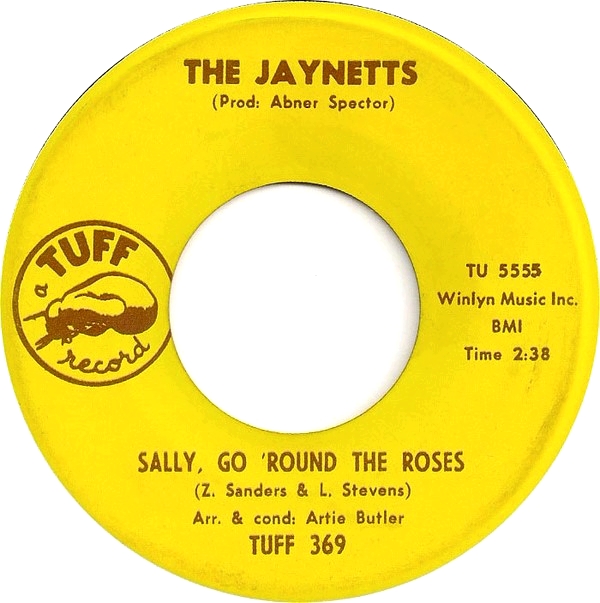 He accused Butler of wasting his money (in all, the record cost $60,000 to assemble, an unheard of figure in those days). So, Butler took the record to famed songwriter/producers Jerry Lieber & Mike Stoller (Elvis, the Coasters, the Drifters, etc.). Lieber & Stoller loved the song and offered to buy it from Spector and release it themselves. Well, their interest changed Spector’s mind. He went ahead and released it himself on the Tuff label, using the name the Jaynetts as the recording artist and crediting himself as producer. Butler did wind up getting credit as arranger, but received only $3 for all his efforts. When the record was released, most photos of the alleged “group” showed only four of the females who sang on the record (Yvonne Bushnell, Ethel Davis (aka Vernell Hill), Ada Ray Kelly and Johnnie Louise Richardson, with Mary Sue Wells eventually replacing Richardson).
The song became an immediate smash, racing up the charts until finally reaching #2 on the Billboard Hot 100 in September of 1963.
One of the reasons for the song’s enduring popularity is the almost other worldly eeriness & melancholy that drench the production. And what has caused this soul-crushing sadness is only vaguely alluded to in the lyric: “Saddest thing in the whole wide world/See your baby with another girl”. A simple case of a cheating lover seems too trivial for such monumental sadness. Over time, many have put forth a variety of other explanations – the song is about lesbian lovers (then a scandalous topic), drug use, the singer has discovered she is pregnant and will be an unwed mother. But like all great rock songs, the meaning of it is totally up to each individual listener to determine.
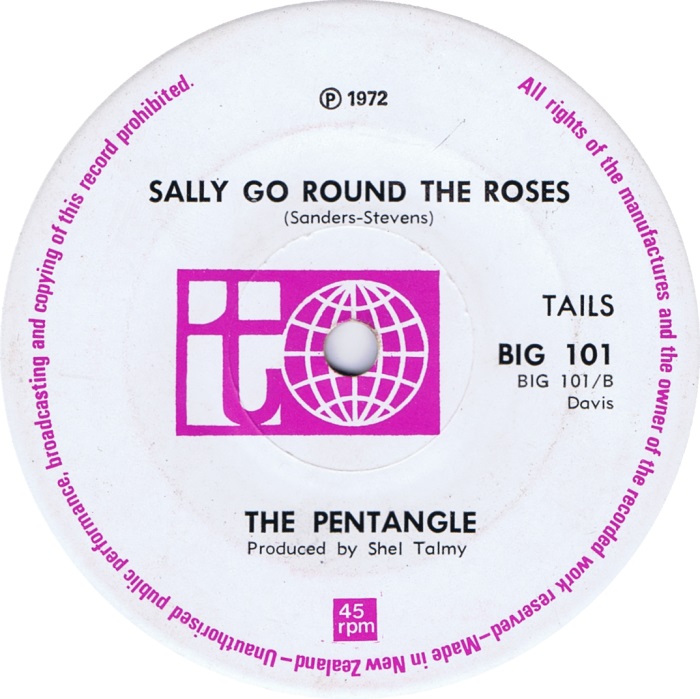 The song has inspired many other rock singers who came after it, including Grace Slick (who performed the song with her original group, the Great Society), Joan Baez (who can be heard singing a bit of the song in the Dylan film, Don’t Look Back), Pentangle (who had a UK hit with the song at the end of the 60s and many others, including Donna Summer who recorded a version when she was going by the name Donna Gaines.
Alas, lightning only struck once. Attempts to follow up “Sally Go Round the Roses” all failed to chart. But the record was named to Billboard’s compilation of the “100 Greatest Girl Group Songs of All Time.” Give it another listen and se if you can figure out why Sally needs to keep going round those roses.
Pop Up Player

Latest Posts–Health & Wellness
-
Snacks That Are Better for Your Teeth
When we snack, we probably think about calories, blood sugar, etc.; but dentists tell us we should also be thinking about our teeth. Foods made with white flour and/or sugar can feed the bacteria in…
-
To Floss or Not to Floss? That Is a Real Question!
No doubt your dentist tells you to floss, but is there any research to back up that advice? Surprisingly, no. There has never been a study to test the benefits of flossing. But that doesn’t…
-
Write Your Way to a Good Night's Sleep
Having trouble falling asleep because something is bothering you? A recent study shows that if you write down what’s bothering you AND how can solve that problem just before going to bed, you increase your…
-
Exercise You May Actually Like to Do!
Contemporary research shows that an active sex life for men and women above 50 is very good for the brain! Those adults who remain sexually active score higher on cognitive tests than those who are…
-
A Great Health Trend: Exercise Snacking
No, exercise snacking does not mean doing arm curls to get the Doritos to your mouth. It means approaching exercise like you approach snacking. It means exchanging one prolonged period of intense exercise for several…
-
Isolation as Bad as Smoking?
We all know modern society is more disconnected than the world we grew up in. That is especially true as we age. Isolation is different than simple loneliness. Isolation means emotional and physical disconnection with…