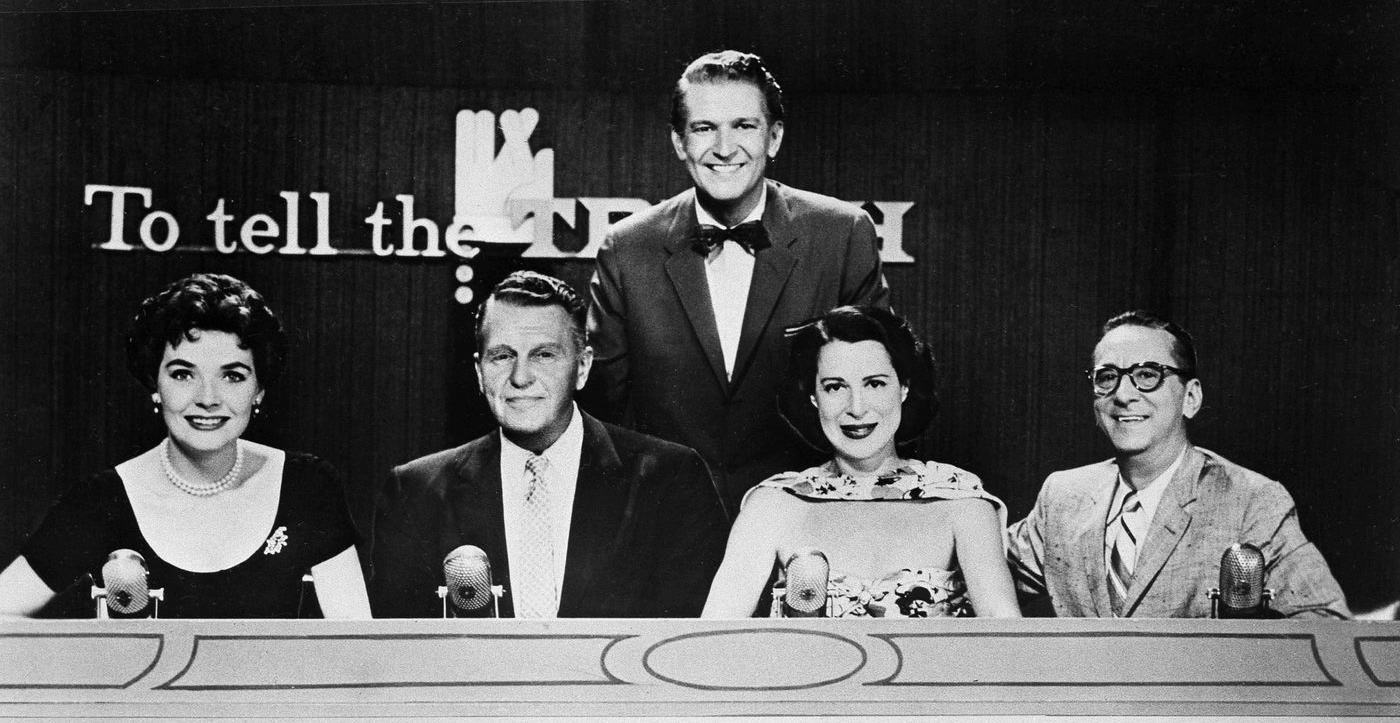


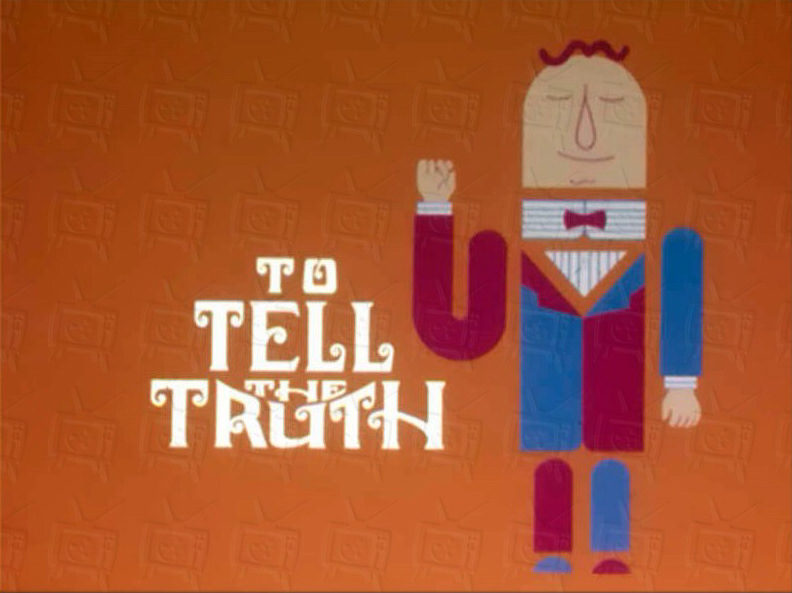
 We all remember To Tell the Truth. It ran once a week on CBS’s prime-time schedule from 1956 to 1967. A 5-day-a-week daytime version was added in 1962 and ran until 1968.
Each episode started with the camera panning across three figures who were shrouded in darkness. The announcer would ask each “What is your name, please.” The lights would come up on each one in turn as they all gave the exact same name.
Then host Bud Collyer would read “a signed affidavit” that explained the unusual story of that round’s central character.
Following that, a celebrity panel of four (usually Tom Poston, Peggy Cass, Orson Bean and Kitty Carlisle) would ask questions, trying to figure out who really gave their true name and which two were imposters.
Finally, Bud would intone, “Would the real [person’s name], please stand up!”
There was some faking out with the contestants until finally, the real person in question would rise to their feet.
But “to tell the truth,” there are some things most of us have forgotten or simply never knew about this beloved game show classic.
- The Show Was Almost Named Nothing But the Truth
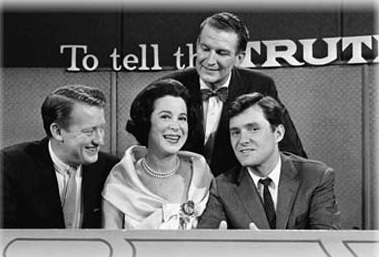 The key phrase comes from the oath witnesses take in court “to tell the truth, the whole truth and nothing but the truth.” When Goodson & Todman produced the pilot, they called it Nothing But the Truth. When CBS bought the pilot, the title was changed to To Tell the Truth.
- Bud Collyer Was Not the Original Host
Mike Wallace hosted the pilot, but the network decided to go with Collyer, who was already hosting Beat the Clock when the show debuted in December of 1956.
- Mark Goodson and Bill Todman Did Not Create the Show
It was created by one of their employees, a guy named Bob Stewart. While with Goodson-Todman, Stewart also created The Price Is Right and Password. Eventually, Stewart formed his own production company that created many network game shows, the most successful being The $10,000 Pyramid.
- The Show Offered Very Little Cash to Contestants
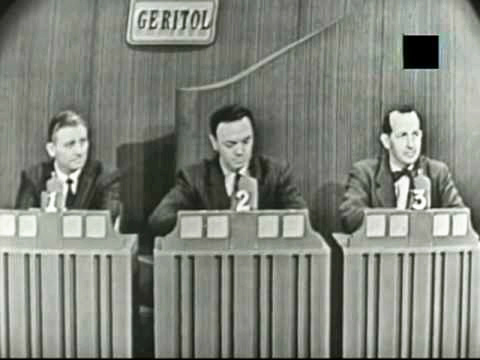 On the daytime version, stumping the panelists paid $100 for every incorrect vote for a possible maximum of just $400, which had to be divided 3 ways (who got the extra penny, we don’t know). Should they not stump the panel at all, they got to split a measly $75.
On the prime-time version, the maximum payout was a little better: $1,000 with a $150 consolation prize if no one was fooled.
- The Show Spawned 12 International Versions
Local versions of To Tell the Truth were also produced in the UK, Australia, Thailand, the Ukraine and 8 other countries.
- The Show Is One of Only 2 Game Shows to Be Broadcast for 7 Consecutive Decades
After To Tell the Truth ended its initial run on CBS, it has been revived in syndication and on NBC and ABC. It has aired at least one new episode in every decade from the 1950s to the present. The other 7-decade run is Bob Stewart’s The Price Is Right.
And that’s the truth, we swear it!